[COPY]
🗓️ Friday, 30 Jan 2026
Hi, and welcome back to Growth Espresso - your one-stop destination for everything e-com.
One thing that’s changed as brands scale isn’t email itself—it’s the cost of getting decisions wrong.
At smaller volumes, rough segmentation and “good enough” timing still work. You can send more, test more, and let averages smooth things out. As you grow, that margin disappears. Every irrelevant send shows up as list fatigue. Every mistimed nudge shows up as missed revenue. Every bad assumption compounds.
That’s why AI has quietly become useful in email—not because it writes better copy, but because it helps teams make fewer wrong decisions.
The brands using AI well aren’t chasing novelty or automation for its own sake. They’re using it to answer questions humans struggle to answer at scale:
Who actually needs to hear from us right now?
What’s the one objection holding this person back?
Is this customer early, loyal, at risk, or just browsing?
Email hasn’t changed.
The volume, complexity, and expectations have.
And once you cross a certain scale, relying on intuition alone stops being a strategy.
Let me show you how the best teams are using AI in email—not to do more, but to be more precise.
1. 1:1 personalization is really about decision clarity
Most teams think about personalization in terms of outputs:
first names, product blocks, dynamic content.
That’s surface-level.
At scale, personalization matters because it reduces uncertainty.
When someone doesn’t buy, it’s rarely because they didn’t see enough products. It’s because something didn’t quite line up—price, timing, relevance, confidence.
Take a simple example:
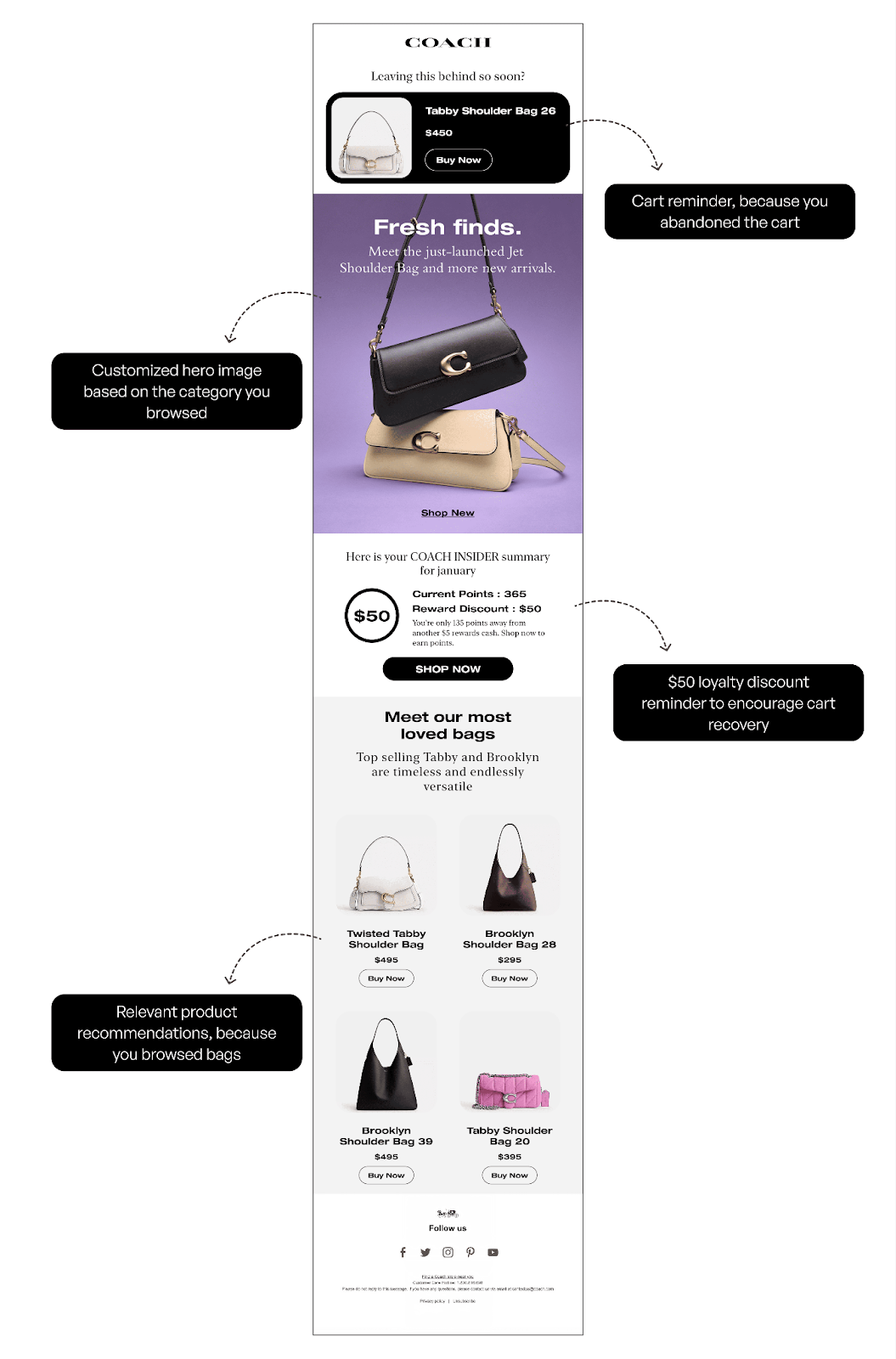
A customer browses bags
Adds one to cart
Leaves without buying
They also have unused loyalty points
A traditional email treats this like forgetfulness:
“Hey, you left something behind.”
A better email treats it like hesitation.
AI helps here not because it’s “smart,” but because it can hold multiple signals at once—cart state, loyalty balance, browsing depth, past behavior—and respond with a message that resolves the most likely friction.
Another customer gets a completely different email, based on their actions.
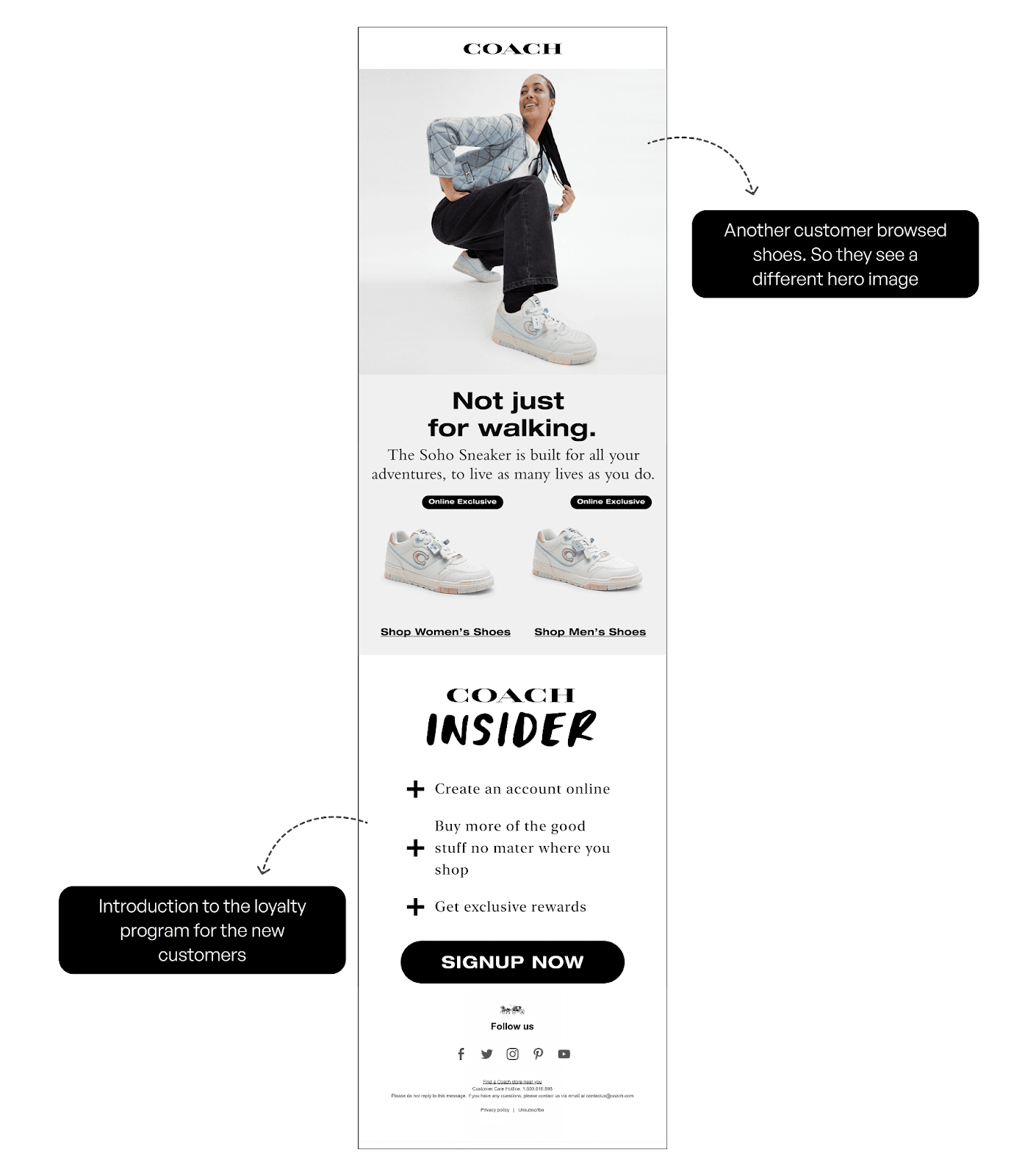
That’s the key shift.
Good personalization doesn’t try to persuade harder.
It tries to remove the last reason not to act.
That’s why 1:1 emails work when done properly—and why shallow personalization doesn’t move the needle.
2. Loyalty and reviews work when they enter the decision early
Most loyalty programs are technically sound and strategically mistimed.
Brands often surface rewards at checkout, when the customer has already done the mental work of deciding. At that point, loyalty feels like a discount—not a reason.
The Body Shop realized this and made a simple but powerful change:
they moved loyalty points and reviews into the email, while customers were still browsing.
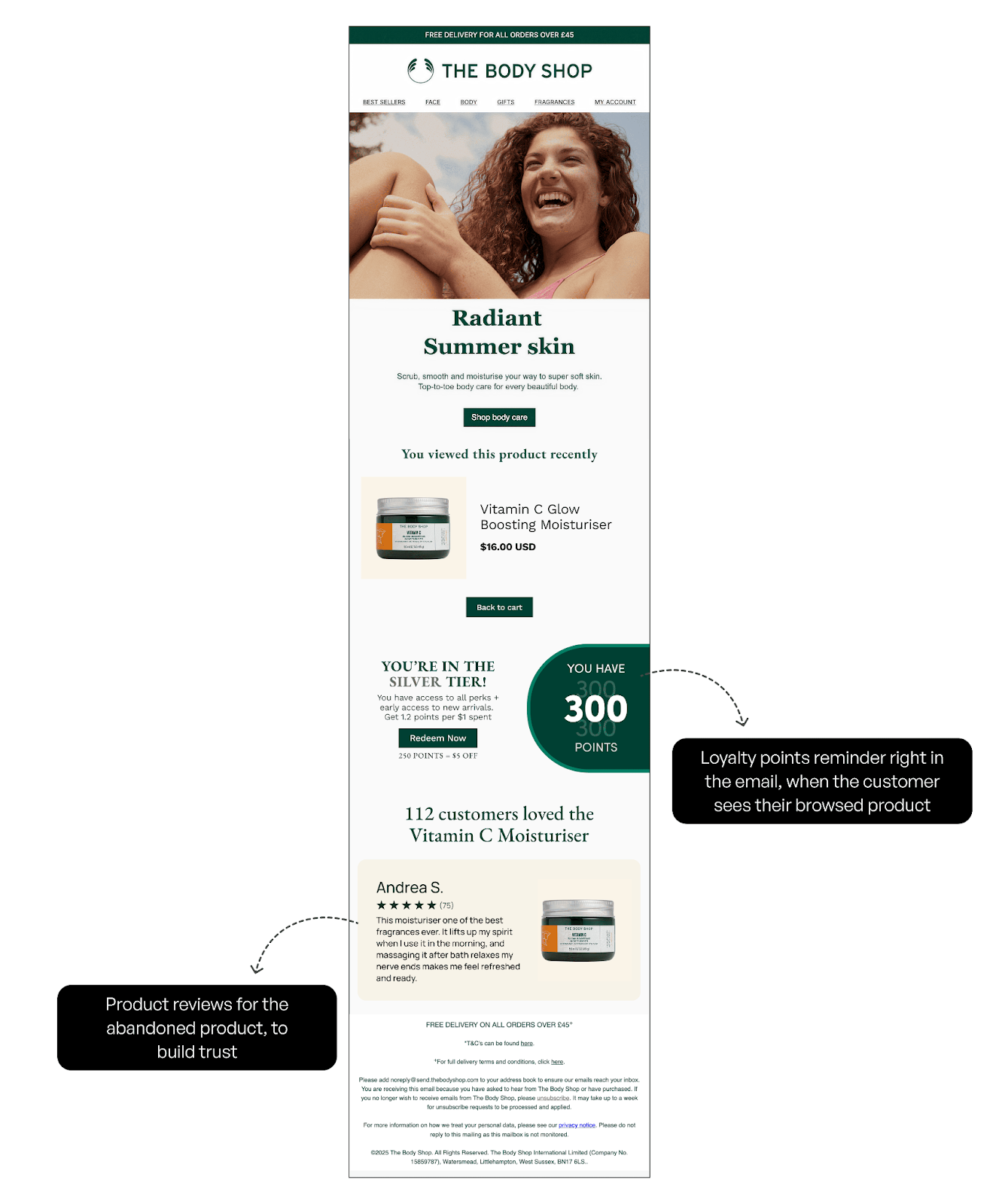
This works for two reasons:
It reframes price before commitment
A product that felt expensive becomes “already partially paid for.”
It lowers perceived risk
Reviews answer the unspoken question: “Will this be worth it?”
AI’s role here isn’t creativity—it’s coordination.
Pulling loyalty data, product data, and review signals together in real time is messy without automation.
The psychology isn’t new.
AI just makes it operationally realistic.
3. Predictive insights are about timing, not control
There’s a tendency to talk about predictive AI as if it’s about knowing customers better than they know themselves.
That’s not how it works in practice.
What AI is actually good at is spotting patterns humans miss at scale:
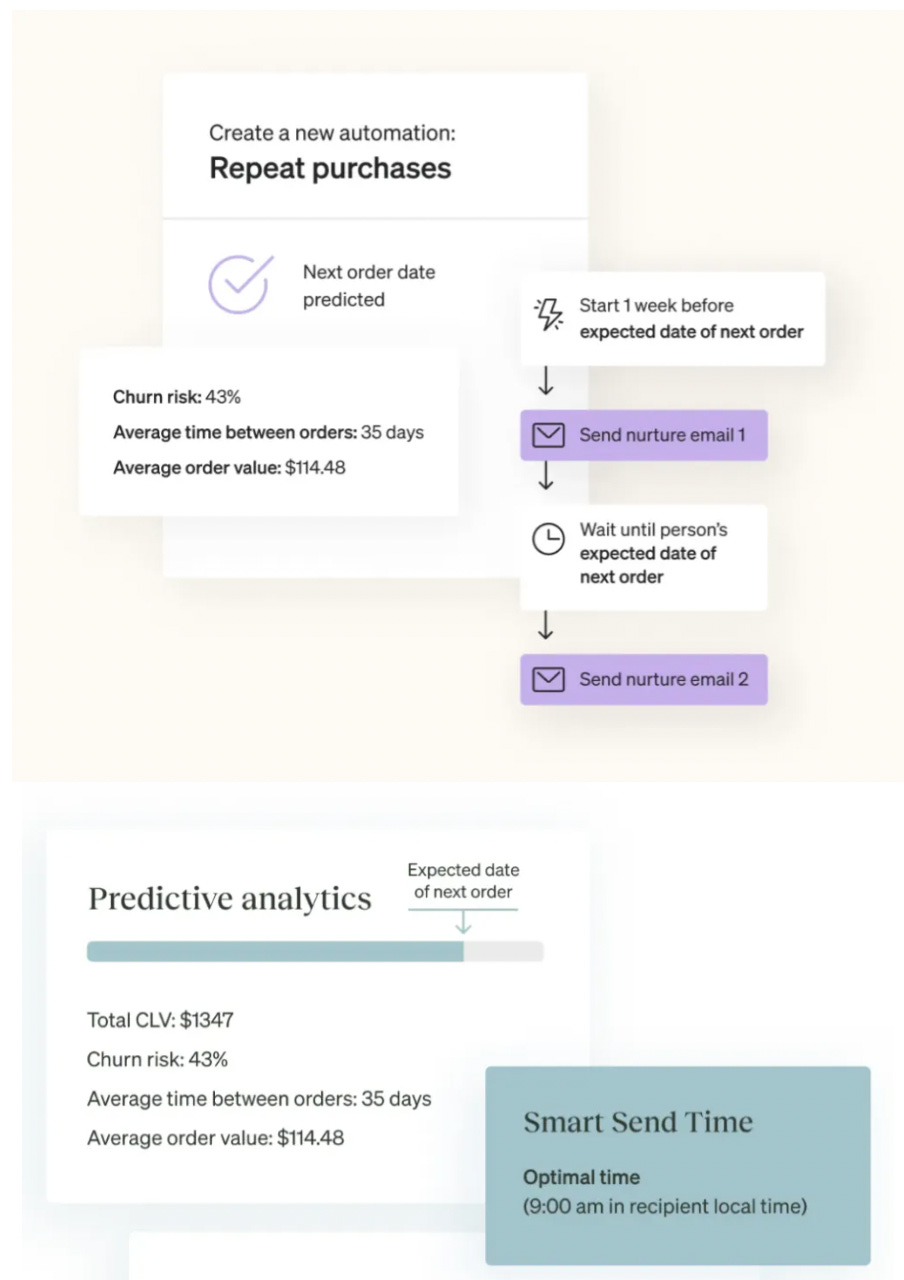
reorder cycles
engagement decay
churn risk
spend ceilings
Magic Spoon is a good example.
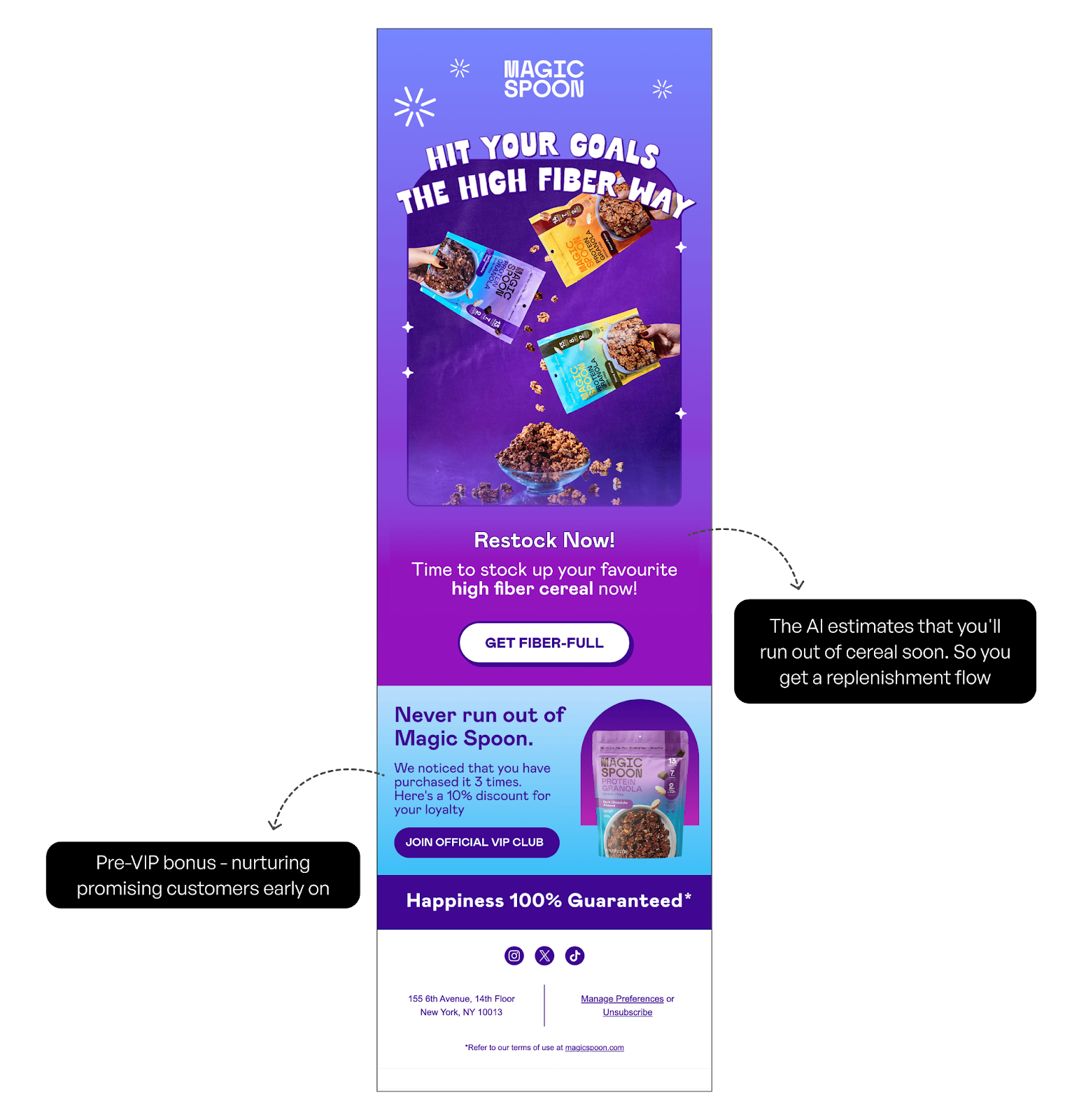
Instead of assuming every subscriber is always equally receptive, they model when someone is most likely to buy again—and adjust outreach accordingly.
This matters because mistimed emails do real damage:
they train people to ignore you
they dilute future intent
they increase unsubscribes without obvious warning signs
Predictive timing doesn’t increase volume.
It increases respect for attention.
And customers respond to that, even if they can’t articulate why.
4. The real leverage comes from stacking signals, not features
Where most teams stop is where things get interesting.
They’ll use AI for one thing—say, send-time optimization or churn prediction—and call it a day.
The better teams stack signals:
lifecycle stage
engagement velocity
purchase frequency
expected value
intent windows
Individually, these insights are incremental.
Together, they change how decisions get made.
At that point, email stops being a series of campaigns and starts behaving like a system—one that adapts without needing constant manual input.
That’s the quiet shift AI enables:
less firefighting, more compounding.
5. Subject lines and copywriting are leverage problems, not talent problems
Yes, AI can generate subject lines.
Yes, it can draft email copy in your brand voice.
That’s useful—but not because AI writes better than humans.
It’s useful because it removes bottlenecks.
When teams aren’t stuck debating subject lines or rewriting drafts, they get time back for higher-order thinking:
offer structure
flow sequencing
segmentation logic
revenue prioritization
AI doesn’t replace judgment.
It protects it—from being exhausted on low-leverage decisions.
That’s why teams using AI well don’t feel automated.
They feel more intentional.
A practical way to think about all this
If you strip away the buzzwords, AI in email does three things well:
It reduces bad assumptions
It improves timing
It scales consistency
That’s it.
The tricky part isn’t whether AI works.
It’s knowing where it actually belongs in your email program—and where it doesn’t.
Some brands try to bolt AI onto broken flows and get disappointing results. Others over-automate and lose the human judgment that made their email good in the first place. The teams that see real gains usually start somewhere much more boring: they map their flows, look at their data honestly, and identify the few decisions that matter most.
That’s hard to do from the inside. Familiar systems hide obvious issues.
When we review email programs, the biggest wins rarely come from “doing more.” They come from spotting mis-timed messages, overlapping logic, or places where AI could quietly remove friction instead of adding complexity.
If you’re thinking about using AI to scale email—and want to pressure-test whether it’ll actually help in your case—a short, focused review is usually the fastest way to get clarity.
No decks. No overhauls. Just a clear view of what’s worth fixing and what’s already working.